
Dryer Vent Cleaning Washington DC — The Fire Risk Hidden Inside Your Home’s Most Overlooked System
📋 What You Need To Know First
Dryer vent cleaning in Washington, DC is a professional residential safety service that removes accumulated lint, debris, and blockages from clothes dryer exhaust systems — the duct that vents hot, moisture-laden air from your dryer to the exterior of your home or building. The U.S. Fire Administration reports that clogged dryer vents cause approximately 2,900 residential structure fires annually in the United States, making lint accumulation one of the leading — and most preventable — causes of home fires in the country. Ubuntu Air Duct Cleaning & Home Services provides professional dryer vent cleaning Washington DC neighborhoods, using rotary brush extraction, high-pressure air purging, and camera verification to fully clear dryer vent systems in DC’s high-rise apartments, historic rowhomes, and converted buildings.
The Number You Need to Know Before You Read Another Word
2,900.
That is the number of residential structure fires caused by dryer vents every year in the United States, according to the U.S. Fire Administration. The leading cause of those fires, in 34% of cases, is a single material: lint.
Lint is the natural byproduct of drying fabric. Every load of laundry your dryer processes generates fine fiber debris — from cotton, synthetic fabrics, wool, and everything else you wash. Some of that lint is captured by your dryer’s lint screen. A significant portion bypasses the screen and travels through your dryer’s exhaust system — the dryer vent — where it accumulates on the interior walls of the duct over months and years of use.
As lint builds up, it does two things that create a fire emergency waiting to happen. First, it restricts the airflow that your dryer depends on to exhaust hot air safely. Restricted airflow forces the dryer to run hotter and longer to achieve the same drying result — generating heat in excess of the dryer’s design specifications. Second, lint itself is highly combustible. Caught fiber suspended in a hot exhaust environment is, functionally, kindling inside your wall.
The Consumer Product Safety Commission estimates that dryer fires cause approximately $200 million in property damage annually in the United States — losses that are almost entirely preventable with routine professional dryer vent cleaning Washington DC.
Washington DC’s specific building environment makes this risk more acute than in most American cities. Here is why.
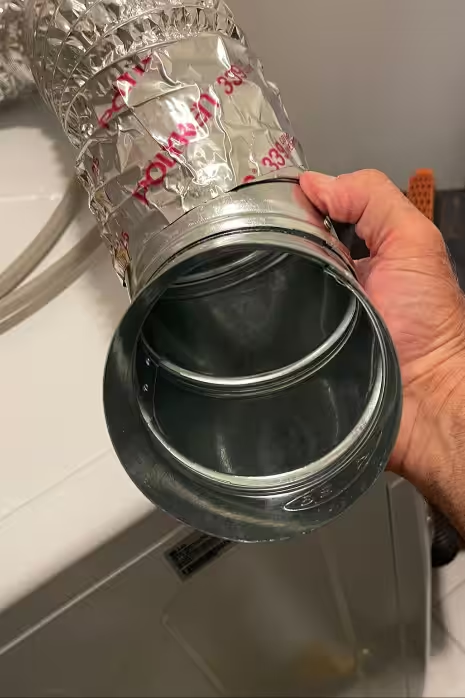
Warning Signs That Your Washington DC Dryer Vent Needs Professional Cleaning
Dryer vent blockage develops gradually in most cases — which means there is usually a period of detectable symptoms before a dangerous condition develops. Washington DC residents should schedule a professional cleaning immediately if they observe any of the following:
- ☑Clothes require two or more full drying cycles to dry completely.This is the most universal symptom of dryer vent restriction, and the one most DC residents eventually notice. When lint accumulation narrows your vent’s effective airflow diameter, hot humid air cannot exit your dryer fast enough — and wet clothes stay wet. Multiple-cycle drying is not a dryer malfunction. It is your dryer vent telling you it needs cleaning.
- ☑The dryer housing, door, or surrounding cabinet becomes noticeably hot during a cycle.A properly functioning dryer vents hot air out of the appliance and through the exhaust system. When that exhaust pathway is blocked, heat has nowhere to go — and it builds inside the dryer cabinet, transferring to the exterior surfaces you can feel. Excessive exterior dryer heat is a direct indicator of thermal stress that elevates fire risk with every additional cycle.
- ☑A burning smell — similar to hot fabric or scorched lint — during or after a drying cycle.Any burning smell during dryer operation should be treated as an emergency. It indicates that lint in your vent system has reached a temperature sufficient to begin the combustion process. Stop using the dryer immediately and call for a professional inspection before the next use.
- ☑The laundry room feels significantly more humid than the rest of your home during drying cycles.Your dryer vents humid air to the exterior of your building. If that humid air cannot exit through a blocked vent, it exhausts back into your laundry space — raising indoor humidity, promoting moisture damage to walls and cabinets, and creating conditions for mold growth in your living space.
- ☑Visible lint accumulation around the exterior exhaust cap or on surfaces near the vent opening.Lint that exits your vent in sufficient volume to accumulate visibly at the exterior cap indicates that the interior duct walls are already shedding accumulated lint — a sign that total blockage is approaching.
- ☑The automatic moisture sensor on your dryer is triggering extended cycles.Modern dryers use moisture sensors to determine when clothes are dry. When vent restriction prevents adequate heat exhaust, the moisture sensor continues to detect humid air and extends the cycle indefinitely. Abnormally long sensor-driven cycles are a reliable vent restriction indicator.
- ☑Your lint trap fills unusually slowly compared to previous cycles.A lint screen that accumulates less lint than usual can indicate that the vent pathway leading to it is already blocked — directing lint away from the screen and into the vent run rather than allowing it to be captured.
- ☑More than 12 months have passed since your last professional dryer vent cleaning Washington DC.The NFPA recommends annual professional dryer vent cleaning Washington DC for most households. In DC’s high-rise apartment and converted building environments — where vent runs are longer, routing is more complex, and shared infrastructure amplifies risk — this annual recommendation is a minimum, not a ceiling.
Our Dryer Vent Cleaning Washington DC Process — Built for DC’s Buildings
Our dryer vent cleaning Washington DC process was developed for the specific configurations, building types, and risk profiles present in Washington DC’s residential landscape — not a generic suburban approach adapted to an urban environment.
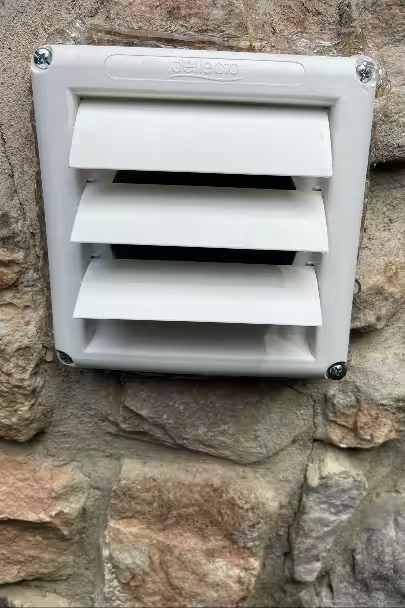
Step 1 — System Assessment and Vent Mapping
Before any cleaning begins, our technician performs a complete assessment of your dryer vent system. This includes identifying the vent type (rigid metal, semi-rigid metal, foil flex, or plastic flex), measuring the total vent run length, mapping every bend and junction in the system, inspecting the exterior exhaust cap for blockages, bird nesting, or damage, and using a flow meter to establish the current airflow rate as a baseline. In DC’s complex building environments — particularly high-rise apartments with shared risers and historic rowhomes with non-standard routing — this mapping step is critical to understanding what the cleaning will need to address and what equipment configuration is required.
Step 2 — Exterior Cap Inspection and Clearance
We access and inspect your dryer vent’s exterior exhaust cap before beginning interior cleaning. In DC’s urban environment, this step frequently reveals bird nests, accumulated exterior lint, damaged or improperly functioning flapper dampers, and in some cases corroded or collapsed cap assemblies that require replacement before the interior cleaning can be effective. Any exterior blockage is fully cleared at this stage. If the cap itself is damaged or non-functional, we advise on replacement options before proceeding.
Step 3 — Rotary Brush Lint Extraction
We introduce a professional-grade rotary brush system through your dryer vent from the interior connection point. The brush system is sized to match your specific duct diameter — typically 4 inches for residential dryer vents — and extended through the full length of your vent run, including every bend. As the rotary brush agitates compacted lint from vent wall surfaces, a simultaneous vacuum extraction system at the interior connection captures the dislodged material before it can re-enter your laundry space. Consumer brush kits lack the rotary power to dislodge compacted lint from duct walls and cannot generate the simultaneous extraction suction needed to prevent dislodged material from entering the room.
Step 4 — High-Pressure Air Purge
Following mechanical brush extraction, we perform a high-pressure compressed air purge through the vent run from the interior connection point to the exterior cap. This step serves two functions: it dislodges any remaining fine lint fiber that the brush passes through rather than capturing, and it confirms that the full vent pathway is clear from interior connection to exterior exhaust — verifying that there are no secondary blockages further along the run. The air purge pressure is calibrated to the specific duct material — lower pressure for flex sections to prevent damage, higher pressure for rigid metal runs.
Step 5 — Airflow Rate Verification
After cleaning, our technician uses a flow meter to measure the current airflow rate at the dryer connection point and compares it to the pre-cleaning baseline established in Step 1. A professionally cleaned dryer vent should deliver airflow at or near the dryer manufacturer’s specified exhaust volume — typically 100 to 200 cubic feet per minute depending on your specific appliance. If post-cleaning airflow falls short of specification, we diagnose the cause — which may include vent length that exceeds NFPA guidelines, vent material that requires upgrade, or a crush or collapse in a flex section — and advise on the appropriate corrective action.
Step 6 — Findings Report and Maintenance Recommendations
Every Ubuntu dryer vent cleaning Washington DC concludes with a written findings report documenting: the pre- and post-cleaning airflow measurements, the condition of your vent run and exterior cap, any findings that require follow-up action (damaged duct sections, non-compliant vent materials, excessive vent length), and specific maintenance recommendations tailored to your building type and dryer usage patterns. For building managers overseeing multiple units in DC’s multi-unit residential buildings, we provide consolidated reporting suitable for building maintenance records and insurance documentation.
The Real Cost of a Clogged Dryer Vent — Beyond the Fire Risk
Fire safety is the primary reason to maintain a clean dryer vent — but the financial and operational costs of neglected dryer vent maintenance accumulate long before any fire risk materializes.
Dramatically Higher Energy Consumption
A dryer operating against a partially blocked vent runs significantly longer to achieve the same drying result. The U.S. Department of Energy identifies the clothes dryer as one of the highest-energy appliances in American homes, consuming an average of 769 kilowatt-hours annually under normal operation. A dryer running 30–40% longer per cycle due to vent restriction can add hundreds of dollars to your annual utility costs — particularly significant in Washington DC where electricity rates consistently rank among the highest in the mid-Atlantic region.
Premature Dryer Component Failure
Dryer components are engineered to operate within specific thermal ranges. When vent restriction forces the dryer to run hotter and longer than designed, the heating element, thermal fuse, cycling thermostat, and motor are all subjected to stress beyond their rated specifications. The result is premature failure of components that would otherwise last years longer. Dryer repair costs in Washington DC routinely average $150 to $400 per service call. A single avoided repair call more than covers the cost of an annual professional dryer vent cleaning Washington DC.
Clothing and Fabric Damage
Excessive heat from vent-restricted dryer cycles damages fabric fibers. Natural fibers — cotton, wool, linen — shrink and weaken under sustained high heat. Synthetic fibers — polyester, nylon, spandex — deform and lose their structural integrity. DC households that find their clothing wearing out faster than expected, experiencing shrinkage despite using low-heat settings, or noticing increased pilling and fabric thinning may be experiencing the downstream effects of a dryer running above its intended temperature range.
Moisture Damage in the Laundry Space
When humid dryer exhaust cannot exit through a blocked vent, it exhausts into the laundry room. In DC’s already-humid climate, this additional moisture load creates conditions for mold growth on walls, cabinetry, and flooring in the laundry space — remediation costs that far exceed the cost of preventive dryer vent cleaning Washington DC.
What Separates Professional Dryer Vent Cleaning Washington DC from DIY Approaches
Residents have access to consumer dryer vent cleaning Washington DC kits at hardware stores across the District — flexible brush rods that attach to a standard drill and extend through the vent run. We want to be completely honest about what these kits can and cannot do.
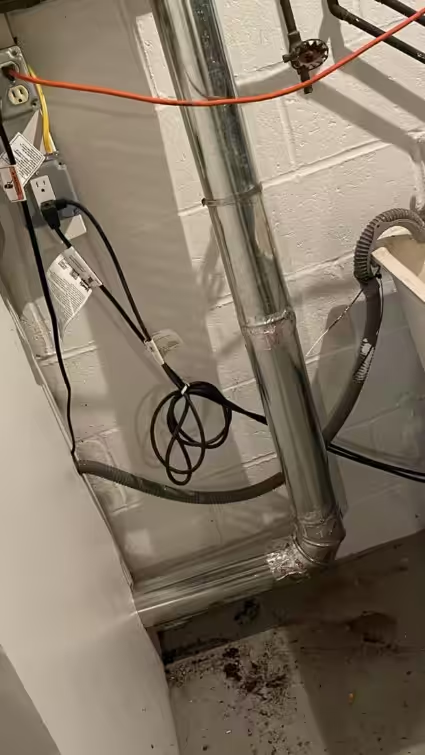
The practical limitation of consumer brush kits in DC’s specific environment is most acute for two of the city’s most common residential configurations: historic rowhomes with 15–25 foot vent runs and multiple bends, and high-rise apartment buildings with shared vertical risers. In both of these cases, consumer cleaning attempts do not resolve the underlying restriction — and may create a false sense of safety by addressing visible surface lint while leaving compacted blockages in place.
Dryer Vent Cleaning Washington DC and Code Compliance
Washington DC homeowners, landlords, and building managers should be aware that dryer vent installation and maintenance is not merely a recommendation — it is governed by specific regulatory requirements at the federal and local level.
NFPA 54 and International Mechanical Code
The National Fire Protection Association‘s NFPA 54 and the International Mechanical Code (IMC), which Washington DC adopts through the DC Construction Codes, establish specific requirements for dryer vent installation: maximum duct length of 25 feet from the dryer to the exterior cap (reduced by 5 feet for each 90-degree elbow in the run), mandatory use of rigid or semi-rigid metal duct material, and minimum duct diameter of 4 inches. Many DC homes — particularly older renovated properties — do not meet these current code requirements. Our findings report documents any code compliance issues identified during cleaning.
DC Rental Housing Code
Under the DC Rental Housing Act and the DC Housing Code administered by the DC Department of Buildings, landlords are required to maintain all mechanical systems — including dryer exhaust systems — in safe and functional condition. A documented dryer vent cleaning Washington DC blockage or non-compliant installation in a rental unit constitutes a housing code violation that exposes landlords to tenant complaints, inspection findings, and remediation orders. Ubuntu Air Duct Cleaning & Home Services provides written service documentation that supports landlord compliance recordkeeping and demonstrates due diligence in appliance safety maintenance.
Building Insurance Requirements
Many homeowner and landlord insurance policies in Washington DC include requirements for regular appliance maintenance — and some explicitly cite dryer vent cleaning Washington DC frequency as a condition of coverage for dryer fire claims. A dryer fire in a home or rental property where the vent system has not been maintained can result in claim denials or reduced settlements based on negligence findings. Our written service report provides timestamped documentation of maintenance that supports insurance claim validity.
Dryer Vent Cleaning Washington DC Building Managers and Property Owners
Ubuntu Air Duct Cleaning & Home Services provides specialized dryer vent cleaning Washington DC programs for DC’s multi-unit residential property managers — a service category that addresses the specific risks and operational requirements of managing dryer vent infrastructure across multiple connected units.
Why Building-Wide Dryer Vent Cleaning Washington DC Matter
In DC’s multi-unit buildings with shared vertical dryer exhaust risers, individual unit cleaning without a building-wide program is incomplete. Lint that accumulates in the shared riser section — above individual unit connection points — is not addressed by any individual tenant’s cleaning appointment. Only a coordinated building-wide cleaning that accesses the full riser from top to bottom removes the lint load that creates back-pressure and distributes fire risk across all connected units.
What Our Building Program Includes
Our multi-unit dryer vent cleaning Washington DC program for property managers provides: unit-by-unit appointment scheduling coordinated with building management and communicated to tenants, full building riser cleaning using professional equipment sized for commercial-scale exhaust infrastructure, exterior cap inspection and clearance at the rooftop or wall exhaust termination points, individual unit findings reports for building maintenance records, and a consolidated building summary report documenting the condition of the full dryer exhaust system. We provide certificates of insurance and coordinate building access through management.
Frequency Recommendations for DC Multi-Unit Buildings
NFPA guidelines recommend annual dryer vent cleaning Washington DC for residential applications. For DC’s multi-unit buildings with shared risers, where the aggregate lint load from multiple units accumulates in the shared infrastructure, we recommend semi-annual cleaning of the building riser section — in addition to annual individual unit cleaning — for buildings with more than 8 units connected to a single riser.
Serving Washington DC — Every Neighborhood, Every Building Type
Ubuntu Air Duct Cleaning & Home Services provides professional dryer vent cleaning Washington DC, serving residential customers, property managers, and building owners across every ward and neighborhood in the District.
We work in all of DC’s primary residential building categories: historic Victorian and Edwardian rowhomes in Capitol Hill, Georgetown, Bloomingdale, LeDroit Park, Shaw, and Petworth; high-rise apartment and condo buildings in NoMa, Navy Yard, the Southwest Waterfront, and Downtown DC; mid-century apartment buildings along Connecticut Avenue, 16th Street NW, and Columbia Heights; and converted residential properties throughout the District.
We also provide air duct cleaning Washington DC homes and buildings — and recommend combining both services in a single appointment for maximum system health and scheduling efficiency.
Frequently Asked Questions About Dryer Vent Cleaning in Washington DC
The National Fire Protection Association recommends professional dryer vent cleaning Washington DC at least once per year for standard residential use. In Washington DC, annual cleaning is the appropriate baseline — but several factors common in DC’s housing environment warrant more frequent service. If you use your dryer more than 5–6 loads per week, the annual interval shortens proportionally to usage volume. If your dryer vent run is longer than 15 feet or contains more than two 90-degree bends — common in DC’s historic rowhomes and high-rise apartments — lint accumulates faster per load than in shorter, straighter runs.
If your building has a shared exhaust riser, the riser section should be professionally cleaned at least twice per year regardless of individual unit usage. And if you have ever noticed any of the warning symptoms — multiple drying cycles, excessive dryer heat, burning smell, or laundry room humidity — you should schedule cleaning immediately regardless of when your last appointment was.
The fire risk in DC high-rise apartment buildings is more complex than in single-family homes for two primary reasons. First, shared exhaust risers distribute fire risk across multiple units — a blockage in the shared riser section creates back-pressure that forces hot, lint-laden exhaust air backward into multiple units simultaneously, creating combustion conditions that affect residents who have properly maintained their own vent sections.
Second, many DC high-rises were built before the current NFPA and IMC standards for dryer vent materials — meaning the shared riser infrastructure in some buildings uses older foil flex duct or thin-wall galvanized material that is more prone to crushing, sagging, and lint adhesion than the rigid metal duct required by current code. Ubuntu Home Services works directly with DC building management teams to assess and address both individual unit and shared riser risks.
Yes — and this is a genuinely elevated risk in Washington DC’s urban environment. Birds — particularly European house sparrows and starlings — are attracted to dryer vent exhaust caps because the warmth of dryer exhaust makes them appealing nesting sites, especially in early spring. A nest in your exterior dryer vent cap creates a complete or near-complete airflow blockage — the most immediately dangerous dryer vent condition. The nest material itself — dried grass, twigs, paper, and fiber — is among the most combustible material that can be present in a vent system.
If you discover a bird nest in your dryer vent cap, stop using the dryer immediately. Do not attempt to remove the nest yourself if the dryer has been in use — the nest may be at elevated temperature. Call a professional for safe removal and full vent cleaning before resuming dryer use. Ubuntu Home Services inspects exterior exhaust caps as part of every cleaning appointment and recommends installing a pest-resistant cap with a fine mesh guard after cleaning to prevent re-nesting.
Yes — significantly. The NFPA and International Mechanical Code specify a maximum dryer vent run length of 25 feet (reduced by 5 feet for each 90-degree elbow in the run) before the system is considered non-compliant due to the restriction it creates. Many DC historic rowhomes — where the dryer was added during a later renovation and the vent run was routed through whatever pathway was available — have runs that approach or exceed this specification. In these configurations, lint accumulates more rapidly because air velocity slows in longer, more restricted runs, allowing more lint to deposit on duct walls per load.
For DC rowhome owners with vent runs exceeding 15 feet, we recommend cleaning every 6 to 9 months rather than annually. Our assessment includes measuring your total effective vent length and providing a maintenance frequency recommendation specific to your system’s configuration.
These are two completely separate systems that serve different functions. Your lint screen — the removable filter you clean after every load — captures the largest lint particles generated during the drying cycle before they enter your dryer’s exhaust pathway. The dryer vent is the external exhaust duct that carries hot, humid air from the dryer’s internal heating chamber to the exterior of your home or building.
The lint screen captures roughly 75–80% of the lint your dryer generates. The remaining 20–25% bypasses the screen and travels into the vent duct, where it deposits on the interior duct walls over time. Cleaning your lint screen after every load does not prevent vent accumulation — it only reduces the rate at which the vent fills. Professional vent cleaning addresses the accumulation inside the duct run itself, which your lint screen cannot reach and which no consumer cleaning practice can substitute for.
For most Washington DC single-family and townhome dryer vent systems, a professional cleaning appointment takes 45 minutes to 90 minutes, depending on the total vent run length, the number of bends in the system, the presence of any exterior obstruction or bird nesting, and the volume of lint accumulation found. Shorter, straighter vent runs in newer DC condos or recently renovated rowhomes tend toward the 45-minute end.
Historic rowhomes with longer, multi-bend runs that have not been cleaned for several years tend toward the 75–90 minute end. For multi-unit building riser cleaning, timing varies significantly based on the number of units connected and the total riser height — we provide time and scope estimates specifically for building engagements after an initial building assessment.
This depends on the severity of the symptoms you are experiencing. If you have noticed a burning smell during dryer operation, excessive exterior heat on the dryer housing, or visible smoke or sparks near the dryer or exhaust cap — stop using the dryer immediately and do not resume use until a professional has inspected and cleaned the system. These symptoms indicate an active fire risk.
If you have noticed performance symptoms without safety symptoms — multiple-cycle drying, increased humidity in the laundry room, or faster lint screen loading — you can continue using the dryer on a temporary basis while waiting for a cleaning appointment, but limit load volume and do not leave the dryer running unattended. Under no circumstances should you use a dryer unattended when any vent restriction symptoms are present. Ubuntu Home Services offers same-day appointments for urgent situations — call (240) 790-5501 if you need immediate service.
Washington DC’s diverse building stock and renovation history means dryer vent systems across the District contain a range of duct materials. Rigid galvanized or aluminum metal duct is the NFPA-recommended standard and the safest configuration — it resists crushing, does not accumulate lint as readily as corrugated surfaces, and withstands the temperatures generated by a properly operating dryer. Semi-rigid aluminum duct is an acceptable alternative in configurations where rigid duct cannot be installed. Thin-wall foil flex duct is specifically identified by the NFPA as creating elevated fire risk due to its tendency to sag, crush, and accumulate lint in its corrugated interior — it is prohibited under current code for dryer vent applications but remains in use in many older DC properties.
Plastic vinyl flex duct is the highest-risk material and is prohibited under all current codes — it does not withstand dryer exhaust temperatures and can melt or ignite under blocked-vent conditions. During every cleaning appointment, our technicians assess the duct material in your system and document any non-compliant material in the findings report.
Yes — and we actively recommend combining both services when scheduling. The two services use different equipment and address different systems in your home, but they share the same general preparation requirements, the same access logistics, and the same documentation delivery at appointment close.
Scheduling both in a single appointment eliminates a second scheduling coordination, reduces the total time your home is occupied by our team, and in most cases qualifies for a bundled service discount. Many DC homeowners who call about one service discover during our intake conversation that both systems would benefit from attention. Call (240) 790-5501 to ask about current bundle availability.
Yes — written documentation is standard on every Ubuntu dryer vent cleaning Washington DC appointment, not an add-on service. Our findings report includes: the date of service and technician identification, the pre- and post-cleaning airflow measurements at the dryer connection point, the condition of the vent run and exterior cap before and after cleaning, any findings that require follow-up action including non-compliant vent materials or excessive vent length, and specific maintenance recommendations for your system.
This documentation supports HVAC warranty maintenance requirements, landlord housing code compliance records, building management maintenance audit trails, and insurance policy maintenance documentation requirements. We retain copies of all service reports and can provide duplicates on request.
Between annual professional cleanings, four practices meaningfully reduce your dryer vent risk and slow the lint accumulation rate. First, clean your lint screen before every load — not after. Second, run a load of clean white towels once per month and inspect them when dry — if you see significant gray-lint transfer on white fabric that has already been washed, your dryer is exhausting more lint than the screen is capturing.
Third, periodically go outside and observe your dryer vent exhaust cap while the dryer is running — you should see a clear, steady stream of warm air. No airflow, weak airflow, or lint visible at the cap exterior are signs of restriction requiring professional attention. Fourth, in spring and early fall, inspect your exterior exhaust cap for bird nest activity — spring nesting season in DC typically begins in March and can result in complete vent blockage within days if a nest is allowed to develop fully.
Contact us at (240) 790-5501 — we can confirm a Washington DC appointment in most cases during the same phone call. You can also reach us at Cs@ubuntuhomeservices.com or through the request form on our website. When you call, let us know your building type, your approximate dryer vent run length if you know it, and whether you are experiencing any of the warning symptoms described on this page.
We serve all Washington DC neighborhoods seven days a week, with early morning appointments beginning at 7:30 AM and evening availability through 7 PM. Same-day appointments are available on most days for calls received before noon, including for urgent situations where active warning symptoms are present.
Schedule Your Dryer Vent Cleaning Washington DC Today
Dryer vent cleaning is the single most direct, most affordable, and most preventable action you can take to eliminate an active fire risk from your Washington DC home or building. Ubuntu Air Duct Cleaning & Home Services removes that risk completely, with documented proof that the work was done and done correctly. One appointment. One written report. One less thing in your DC home that is quietly building toward a preventable emergency.
📍 1101 14th St NW, Ste 210, Washington, DC 20005 · ubuntuhomeservices.com
Ubuntu Air Duct Cleaning & Home Services — Washington, D.C.’s post-construction air quality specialists.